Non Sparking Tools for Chemicals & Pharmaceuticals Industries
Updated: Feb 12
Chemical and pharmaceutical industries operate in highly sensitive and tightly regulated industrial environments. These facilities routinely handle flammable solvents, volatile intermediates, combustible powders, reactive compounds, and pressurized gases. Even minor ignition sources during routine maintenance, sampling, or material handling activities can trigger serious fire or explosion incidents.

In such conditions, non sparking tools form a critical part of industrial safety systems. They help eliminate mechanical ignition risks while ensuring compliance with regulatory standards and operational best practices. As explained in our Ultimate Guide to Non-Sparking Tools for Industrial Safety, certified non sparking hand tools are essential for protecting personnel, equipment, and production continuity in explosive environments.
In this article, we examine the importance of non sparking tools in chemical and pharmaceutical operations, the safety standards that govern their use, and the key hand tools required to control ignition risks in explosive environments.
Customer Testimonial : “We Jotun India paint mfg factory use non sparking tools as a safety purpose. This product is very good, service also good & as per our requirements they developed same one.” – Manager, Jotun Paints India
Importance of Non Sparking Tools in Chemical and Pharmaceutical Industries
Chemical and pharmaceutical facilities continuously handle substances that can easily ignite when exposed to heat, friction, or sparks. These include alcohols, hydrocarbons, solvents, gases, fine powders, and active pharmaceutical ingredients. During manufacturing, storage, filling, and cleaning operations, flammable vapors are often present in confined or partially ventilated spaces.
Since fuel and oxygen are always present in such environments, the only practical way to prevent fire is by eliminating ignition sources. Conventional steel tools can generate sparks when dropped, struck, or slipped on fasteners. In contrast, non sparking tools are engineered to suppress spark formation and safely dissipate mechanical energy.
By using certified spark resistant tools, facilities significantly reduce explosion risks, improve regulatory compliance, enhance worker safety, and strengthen overall risk management systems.
Industry Standards That Mandate Non-Sparking Tools
Global Harmonized System (GHS) and Safety Labeling
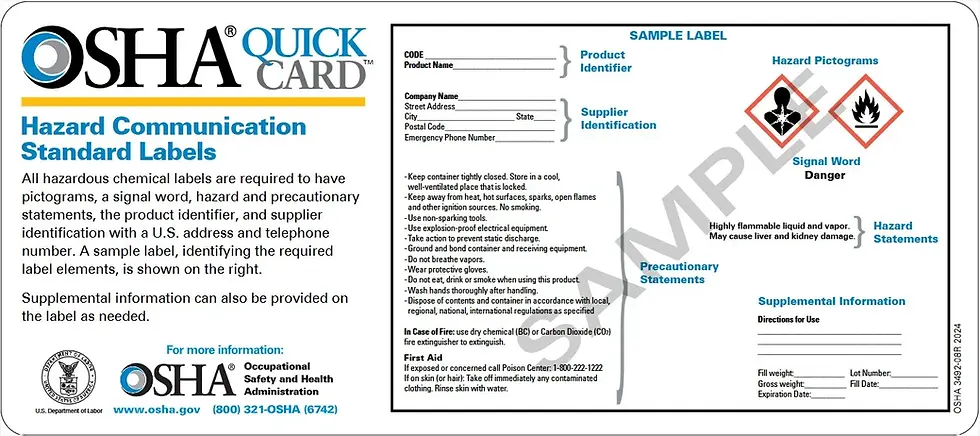
Chemical containers and drums used in manufacturing, storage, and transportation are governed by the Globally Harmonized System for classification and labeling of chemicals. GHS requires standardized hazard communication through pictograms, signal words, and precautionary statements.
For flammable and explosive substances, many labels include the precautionary statement P242 – “Use only non-sparking tools.” This instruction clearly mandates the use of spark-resistant equipment during handling, opening, transfer, and maintenance operations.
OSHA Requirements
Under OSHA 29 CFR 1910.242(a), employers are required to provide and maintain hand and portable powered tools that are safe for the environment in which they are used. In explosive atmospheres, this requirement supports the mandatory use of non sparking tools
OSHA’s General Duty Clause (Section 5(a)(1)) further reinforces this responsibility by treating failure to control ignition risks as a recognized safety violation. OSHA also links ignition prevention to its Process Safety Management standard (29 CFR 1910.119) for chemical processing facilities.
NFPA Standards
The National Fire Protection Association provides guidance on ignition control through several standards. NFPA 70E and NFPA 77 recommend the use of non sparking tools in environments where flammable vapor-air mixtures or static electricity hazards are present.
Additionally, NFPA 30 for flammable liquids and NFPA 654 for combustible dusts support the use of non sparking tools during maintenance and operational activities. These standards emphasize eliminating mechanical ignition sources as a key fire prevention strategy.
Importance of Reading Safety Labels
Operators, technicians, and maintenance personnel must carefully read chemical labels before starting any task. These labels provide critical information about ignition risks, ventilation requirements, and permitted equipment.
Ignoring label instructions and using steel tools in restricted areas is a major compliance violation and a frequent cause of industrial accidents.
Regulatory and Audit Expectations
Safety audits, insurance inspections, and regulatory reviews routinely verify whether appropriate non sparking tools are available and in active use. Facilities that fail to comply may face operational shutdowns, financial penalties, and increased liability exposure. Certified non sparking tools therefore support both operational safety and long-term regulatory readiness.
Tools Used in Chemical and Pharmaceutical Industries
Chemical and pharmaceutical industries operate in environments where ignition risks are continuous and systemic.
By selecting the right tools, materials, and suppliers, organizations can protect workers, maintain compliance, and ensure long-term operational safety. From our years of experience serving the chemical and pharmaceutical industries, we have compiled below the most widely used tools in chemical and pharma applications.

Non Sparking Spanners & Wrenches
Basic maintenance activities require non sparking spanners, combination wrenches, adjustable wrenches, hammers, and screwdrivers. These tools are used for equipment installation, pipeline servicing, valve maintenance, and machinery adjustments. Selecting the correct tool size and type is essential to ensure safe operation, proper torque application, and effective ignition risk control.

Non Sparking Scrapers & Putty Knives
Scrapers and putty knives are widely used for removing residues, cleaning reactors and vessels, mixing compounds, surface preparation, and equipment maintenance. Non sparking Scrapers enable safe cleaning and mixing operations without introducing ignition hazards, especially in paint, coatings, and solvent-based processing units.

Non Sparking Bung Wrenches
Non sparking bung wrenches is designed to safely operate drum plugs and bungs without generating sparks. These tools are essential for material transfer, sampling, storage, and waste handling operations.
For more information, refer to our Non Sparking Bung Wrench Selection Guide for Chemical Drums and Barrels

Non Sparking Oil Pumps
A non-sparking manual oil pump is designed for the safe transfer of flammable oils, fuels, and solvents in hazardous environments where ignition risks are high. These pumps are commonly used in chemical plants, refineries, fuel depots, and pharmaceutical facilities to ensure safe fluid handling without relying on electricity.

Non Sparking Drum Cap Sealers
Cap sealers are used to secure drum lids and container caps after filling or inspection. Improper sealing can lead to vapor leakage and pressure build-up. Non sparking cap sealers allow safe crimping and sealing without friction sparks. Correct usage is essential for maintaining container integrity. For operational guidance, refer to our guide on How to Use a Cap Sealer Safely in Explosive Environments

Non Sparking Gas Cylinder Keys
Many pharmaceutical and specialty chemical companies use hydrogen, methane and other compressed gases. Hydrogen has extremely low ignition energy and presents high explosion risk.
Non sparking gas cylinder keys and valve tools are mandatory for safe cylinder operation. Copper titanium tools are especially preferred due to their high strength and near non-magnetic properties.

Spark Proof Custom Tools
Custom-made non-sparking tools for tank farms, sampling units, laboratories, and valve operations are specially engineered to ensure maximum safety in flammable and explosive environments. They are designed according to specific operational requirements, including size, torque capacity, access limitations, and chemical compatibility.
Why Chemical and Pharmaceutical facilities must invest in certified Non Sparking tools?
Using uncertified or low-quality tools increases fire risk, leads to regulatory non-compliance, causes equipment damage, results in production losses, and exposes organizations to legal liabilities.
Certified non-sparking tools compliant with IS 4595-1969 (2006) provide documented safety performance, consistent quality, and long-term reliability, supporting operational continuity and corporate safety commitments.
Pahwa MetalTech offers one of the most comprehensive portfolios of non sparking tools for chemical and pharmaceutical industries, including standard tools, bung wrenches, customized solutions, and advanced copper titanium and aluminum bronze alloys.
Download our catalogue to explore detailed specifications and application guidance for over 3,500+ certified safety tools. For customized requirements, bulk procurement, or technical consultation, send us an RFQ and our experienced engineering team will assist you.


Comments