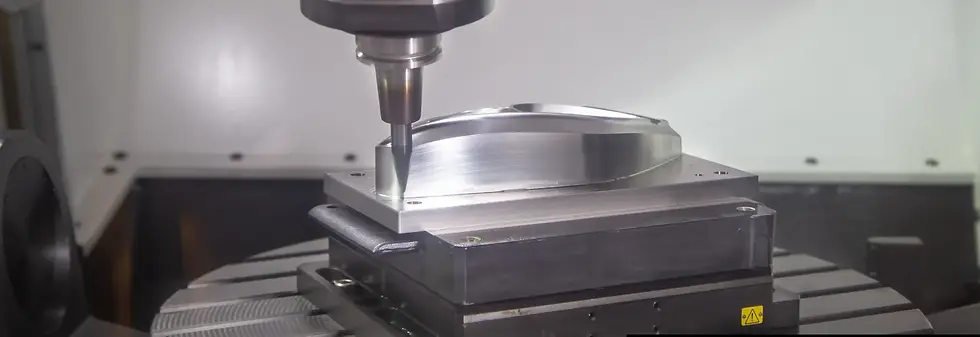
Precision Investment Casting Tooling & Prototyping Solutions
Pahwa MetalTech provides precision investment casting tooling solutions designed for dimensional accuracy, repeatability, and efficient production. From tooling design and simulation to prototype development and production-ready wax dies, we support the development of complex cast components for demanding industrial applications.
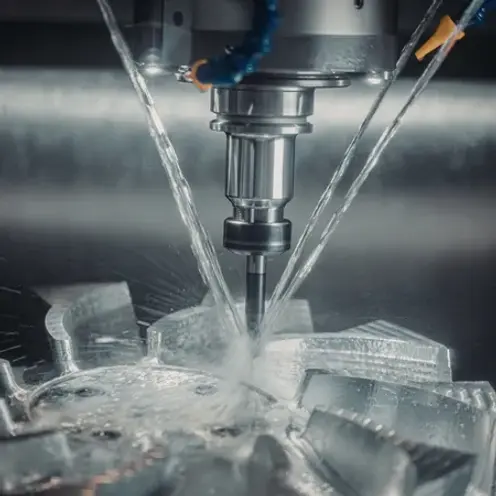
Advanced Tooling Solutions for Precision Investment Casting
Tooling is central to achieving consistent results in precision investment casting. Properly engineered tooling influences pattern quality, dimensional stability, casting integrity, and long-term production performance
At Pahwa MetalTech, we develop tooling solutions for complex geometries, tight tolerances, and varying production volumes, ranging from prototype and bridge tooling to multi-cavity production tooling.
Our capabilities include conventional hard tooling, rapid tooling approaches, and process-driven tooling development designed to improve manufacturability, reduce development risk, and support reliable casting outcomes.
Our Investment Casting Tooling Process
Design and Engineering : We review part geometry, tolerances, shrink factors, gating considerations, and production requirements to develop tooling optimized for both pattern creation and casting performance.
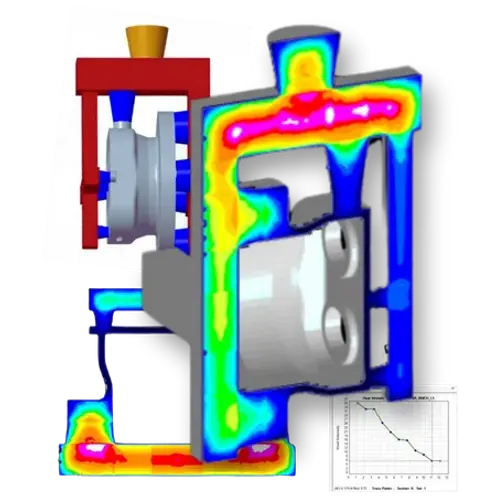
Simulation : Simulation is used to analyze fill behavior, solidification, and potential defect risks before tooling is built, helping reduce development iterations.
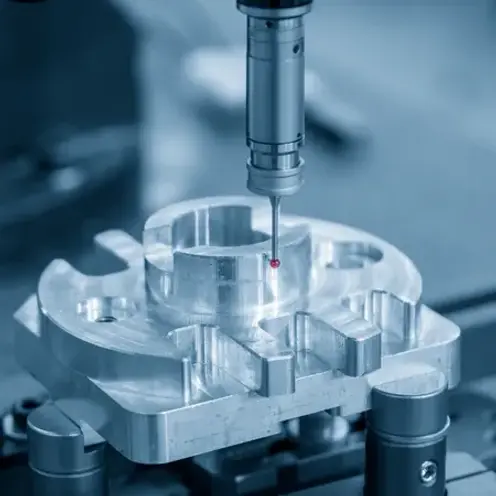
Tooling Manufacturing and Inspection : Tooling is manufactured using precision machining and validated through inspection to ensure dimensional conformance and functional performance.
Wax Injection : Controlled wax injection parameters help produce consistent patterns with repeatable dimensions and surface quality.
Refinement and Testing : Trial runs and validation testing allow tooling refinements before full production, improving process stability and part quality.
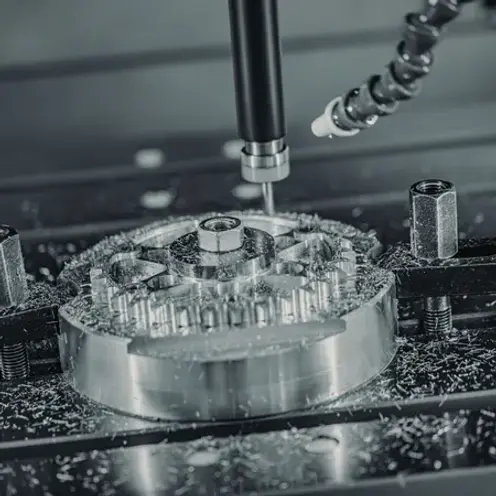
Tooling Options for Different Production Needs
Tooling is central to achieving consistent results in precision investment casting. Below are the different types of tooling used across the process, each serving a specific function in achieving pattern accuracy, dimensional stability, casting integrity, and long-term production performance.
Prototype and Bridge Tooling : For early-stage development or lower-volume requirements, bridge tooling offers a practical path for validating designs before full production tooling investment.
Single and Multi-Cavity Tooling : Depending on volume requirements, tooling can be developed as single-cavity or multi-cavity configurations to optimize throughput and production economics.
Production Tooling : Engineered for long-term repeat production, production tooling supports high-volume requirements with durability, consistency, and extended tool life.
Benefits of Quality Investment Casting Tooling
Improved Dimensional Accuracy and Repeatability : Well-designed tooling helps maintain tight tolerances and consistent dimensions across wax patterns and finished castings, supporting reliable repeat production.
Better Wax Pattern Consistency : Quality tooling contributes to stable wax injection and uniform pattern formation, improving pattern repeatability and reducing variation during downstream processing.
Reduced Process Variability and Casting Defects : Optimized tooling can help minimize variability in the casting process while reducing risks associated with defects such as shrinkage, misruns, or dimensional inconsistencies.
Lower Secondary Machining Requirements : Precision tooling supports near-net shape casting, which can reduce additional machining, finishing operations, and related production costs.
Improved Surface Finish Performance : Consistent tooling and pattern quality can contribute to improved casting surface finish, particularly for components with fine details or complex geometries.
Faster Development and Production Ramp-Up : Effective tooling development can shorten qualification cycles, reduce process adjustments, and support a smoother transition into production.
Extended Tool Life : Properly engineered tooling, combined with suitable materials and maintenance practices, can provide long-term durability and reliable performance.
Lower Total Production Costs : By improving efficiency, reducing secondary operations, and supporting process stability, quality tooling can help lower overall production costs.

Prototyping for Investment Casting Development
Tooling is central to achieving consistent results in precision investment casting. Properly engineered tooling influences pattern quality, dimensional stability, casting integrity, and long-term production performance
3D Printed PLA Patterns : PLA patterns can support early-stage form, fit, and process validation for prototype castings. They are often used to accelerate development before hard tooling is commissioned, helping evaluate design feasibility and reducing lead times during prototyping.
3D Printed Wax for High-Precision Parts : For intricate geometries and fine-detail parts, 3D printed lost wax casting using printed wax patterns offers a rapid route for high-precision prototype development. It enables complex features, fine tolerances, and design validation before production tooling is developed.
Machining Route : Machined prototypes can support functional evaluation, low-volume development, and applications where machining is preferred during early-stage validation. It can also support material performance testing and dimensional verification before transitioning to cast production.
Wax Die – Small/Single Cavity for Trials : Small or single-cavity wax dies provide a practical approach for pilot runs, qualification trials, and pre-production testing. They can support process validation, sample approvals, and limited-volume development before full production tooling.
Your Trusted Partner in Precision Metal Components
Pahwa MetalTech is a leading investment casting manufacturer in India, offering end-to-end solutions from design and rapid prototyping to precision casting, CNC machining, and quality assurance. Contact us today to discuss your requirements and support your next project.
Expert Solutions for Complex Metal Casting Requirements
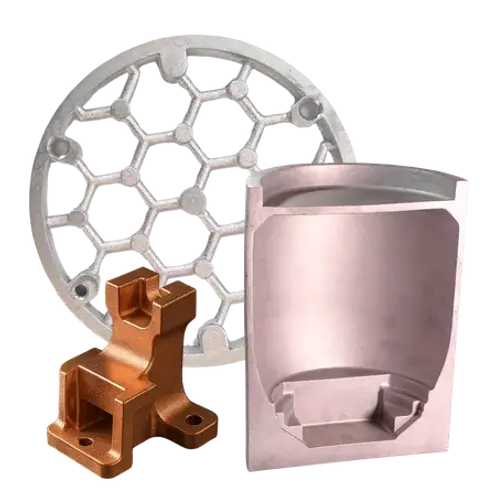
At Pahwa MetalTech, we are a trusted lost wax casting manufacturer in India specializing in precision components across copper alloys, stainless steel and aluminium alloys. Our advanced foundry delivers high-integrity castings for demanding global applications.
We produce custom lost wax castings requiring strength, corrosion resistance, conductivity and dimensional accuracy. Our team selects the right alloy to ensure optimal performance, durability and consistency.
Learn more about our investment casting expertise and how we deliver precision-engineered components across industries.
Product Optimization & Added Value Services
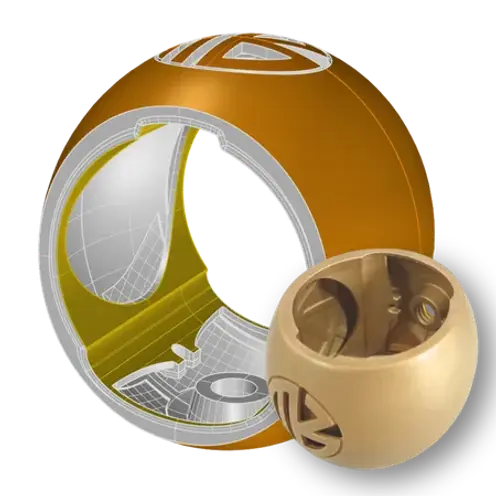
Enhanced Design for Manufacturability : We work with customers to optimize component geometry for castability, improve material utilization, and resolve manufacturability challenges early in development. This engineering support can improve yields, reduce defects, and streamline production.
Reduction of Secondary Operations : Through near-net shape design and precision tooling, secondary machining, welding, and finishing operations can often be reduced, lowering costs while improving process efficiency.
3D Scanning to Capture Part Geometry : Using 3D scanning, we can capture geometry from sample parts or wax patterns for reverse engineering, CAD generation, and tooling development. This capability also supports 3d printed lost wax casting workflows for accelerated prototype development.