
Surface Finishing in Investment Casting
Proper surface finishing preparation begins after the casting is removed from the shell, where residual ceramic, gates, and risers are removed. This ensures a clean base surface and prevents defects from carrying into later stages.
Cleaning processes such as shot blasting, sand blasting, or chemical cleaning are applied to remove oxides, scale, and impurities. The method depends on the alloy and complexity, ensuring a uniform surface for further treatment.
Finally, inspection and minor corrections like fettling or grinding smoothen irregularities and prepare the casting for final finishing. This step ensures better consistency and effectiveness of subsequent finishing processes.
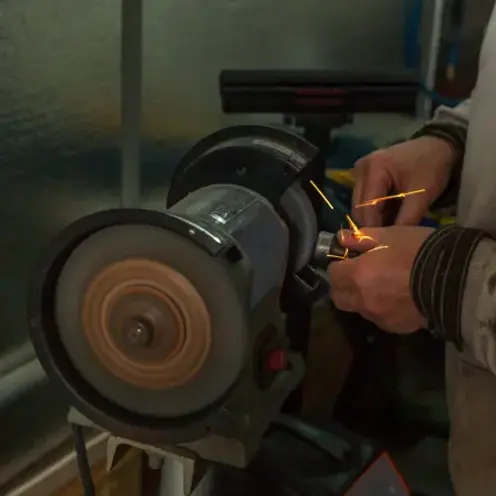
Common surface finishing techniques
Several surface finishing techniques are commonly used in investment casting to enhance quality and performance. These methods help improve surface cleanliness, strength, corrosion resistance, and overall appearance.
Sandblasting for Surface Cleaning
Sandblasting propels abrasive particles at high velocity onto the casting surface to remove oxides, scale, and contaminants. It creates a uniform matte texture and prepares components effectively for further finishing operations.
Chemical Finishing for Corrosion Resistance
Chemical finishing processes like passivation and anodising enhance surface properties and corrosion resistance. These treatments form protective layers, improving durability and performance in demanding environments.
Shot Peening for Strength Enhancement
Shot peening bombards the casting surface with spherical media to induce compressive stresses. This improves fatigue strength and durability while maintaining dimensional integrity, making it suitable for critical applications.
Electroplating for Functional Coatings
Electroplating deposits a thin metal layer onto the casting using electrochemical processes. It enhances corrosion resistance, improves wear properties, and provides both decorative and functional surface finishes.
Grinding and Polishing for Smooth Finish
Grinding removes excess material and surface irregularities, while polishing enhances smoothness and reflectivity. Together, they deliver tight tolerances and high-quality finishes for precision and decorative components.
Protective Coating for Surface Protection
Coating methods such as powder coating or painting add a protective layer to the casting surface. These coatings improve corrosion resistance, enhance appearance, and offer long-term protection against environmental exposure.
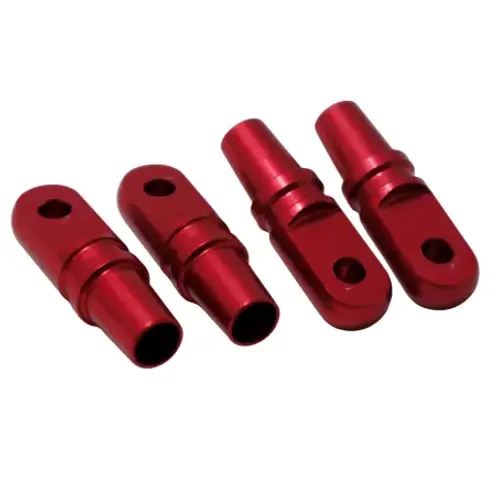
Choosing the Right Surface Finish for Investment Castings
Selecting the appropriate surface finishing technique is essential to achieve the desired performance, durability, and appearance of investment cast components. The right approach depends on material, application, and production requirements.
Material Compatibility - Different alloys such as stainless steel, aluminium, and copper-based materials, require specific finishing techniques to ensure optimal results without affecting mechanical properties.
Application Requirements - Functional and aesthetic needs such as corrosion resistance, wear performance, surface smoothness, and visual appeal must be carefully evaluated based on end use.
Cost and Production Efficiency - Finishing methods vary in cost and processing time, making it important to balance performance benefits with economic feasibility, especially for large production volumes.
Performance and Quality Enhancement - The right surface finishing process improves durability, dimensional accuracy, and surface integrity, ensuring components meet stringent industrial standards and deliver reliable performance.
Heat Treatment of Investment Casting
Heat treatment improves the mechanical properties and performance of investment cast components. Controlled heating and cooling cycles enhance strength, hardness, ductility, and microstructural uniformity for demanding applications.
Precipitation hardening is used for stainless steels and copper alloys to increase strength without reducing toughness. It involves solution treatment and aging, where fine precipitates form to improve hardness and stability.
For aluminium castings like A356 or LM25, T6 heat treatment includes solution treatment, quenching, and aging to enhance strength and wear resistance. Vacuum heat treatment is used for oxidation-sensitive alloys, preventing scaling and ensuring clean surfaces with precise microstructure control.
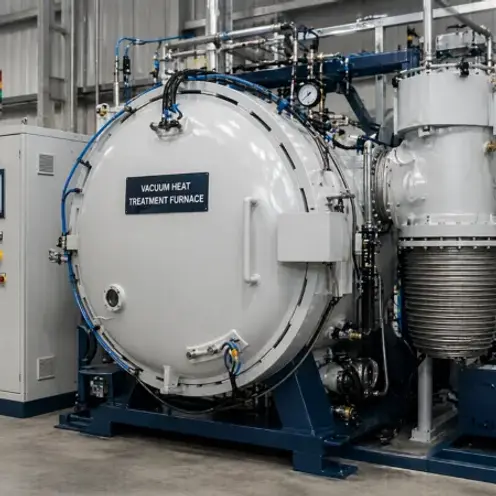
Looking for Investment Castings with Surface Finishing Solutions?
Partner with Pahwa MetalTech to optimize the performance of your investment cast components through precision heat treatment and surface preparation processes. We ensure improved strength, durability, surface integrity, and consistent quality for demanding industrial applications.
Contact our team to discuss your requirements and receive expert technical guidance along with customised solutions tailored to your heat treatment and surface finishing needs.